Does my heating system need a buffer tank?
Introduction
If you make your house more sustainable, you'll probably see the terms 'buffer tank' and 'boiler'. Both store water and are expansions of a heat pump system, but they have different functions and benefits. They can both be interesting in combination with your heat pump. In this article, we'll explain the difference between a buffer tank and a boiler.
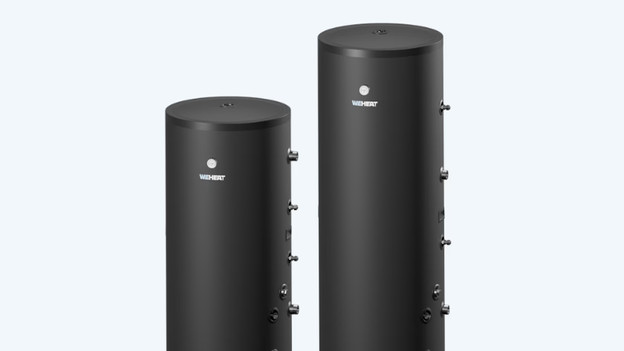
What's a buffer tank?
A buffer tank is a medium-sized water tank that you can store warm water in. You can use this water for your heating system, like radiators or floor heating. This way, your heat pump works more efficiently and save energy. Especially when you don't have much water running through your heat distribution system, like when you just have radiators. Note: you don't shower or cook with this water. You need a boiler for this if you don't have a central heating boiler.
- The Weheat buffer tank is 65cm high and fits 50L of water.
- Made of Duplex stainless steel, so the tank doesn't get rusty.
- The tank weighs 18kg without water.
What's a boiler?
A buffer tank, also called a warm water boiler, is a tank that you can store warm faucet water in. You use this warm water to shower, cook, or clean with. You need a boiler when you have a fully-electric installation, as a heat pump is unsuitable to make warm water at high temperatures at the speed you use it with. That's why you need a supply, which the heat pump can make and store in the boiler. Because the supply can run out, we recommend you keep in mind the peak times and choose the size of your boiler accordingly.
- Choose a Weheat boiler with a 200 to 300L water capacity.
- The boiler is 125cm high for 200L of water, and 160cm for 300L of water.
- Made of Duplex stainless steel, so the boiler doesn't get rusty.
- The boiler weighs 52kg without water.
Pros and cons buffer tank
- Your house stays warm constantly, even when the heat pump temporarily isn't heating
- Your heat pump works more efficiently because you store heat for later use
- Your heat pump or central heating boiler doesn't turn on and off as often, which reduces wear.
- A buffer tank increases your investment amount
- A buffer tank requires extra space
Pros and cons boiler
- The water stays at a constant temperature, so you don't have to wait for warm water long
- You can make warm water with your heat pump, which is more affordable than with a central heating boiler or electric boiler
- You'll only earn back your purchase when you completely stop using gas
- Sometimes, you might use more warm water than the heat pump can refill
- So, choose a boiler that's large enough to last through your busiest moments

What suits you?
Whether you need a buffer tank or boiler, depends on your situation, chosen system, and wishes. Do you have a low-capacity heat supply system? A buffer tank is often a good choice. Going for a fully-electric setup? You'll need a boiler for warm faucet water.
At Coolblue Energy, we're happy to help you make the right choice. Ask a free advice conversation and discover which solution suits you.