Written by Gaby
Edited on
20 October 2023
·
12:02
What determines the performance of an air purifier?
The performance of an air purifier depends on a number of things: the cleaning technology, the quality of the filters, and the Clean Air Delivery rate. To create a fair comparison of the air purifiers, we test all models in our assortment on their performance. In this article, we'll explain how we tested them and why this information is relevant for you.
Clean Air Delivery Rate
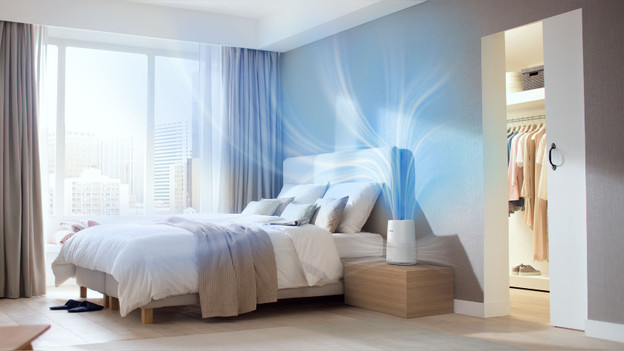
The Clean Air Delivery Rate (CADR) indicates how many cubic meters the air purifier purifies per hour. It has to purify all the particles in the air. The quality of the filters and the power of the air purifier affect the CADR value. All air purifiers from our assortment have been tested in the same circumstances in a lab to measure this value. That way, we can compare all the air purifiers in an honest way.

How do we calculate the surface?
With the information from our lab test, we've calculated the maximum purifiable surface. We've used a ceiling height of 2.5m for this. When calculating the number of square meters processed by the purifier in 1 hour, we considered various usage situations. We always test in the same circumstances. Thanks to this, we can properly compare the air purifiers.
Cleaning technology and filters
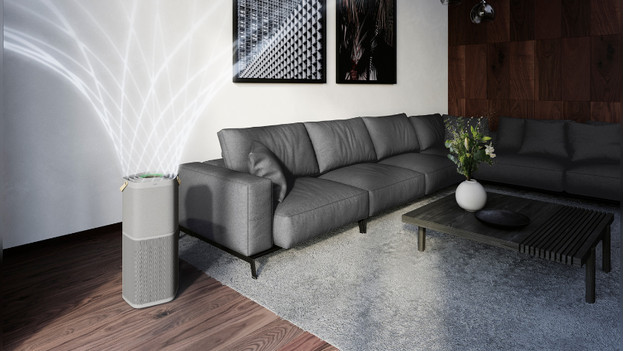
The cleaning technology and filters also play a part in the performance of the air purifier. Which filters are needed differs per air purifier. There are pre-filters, carbon filters, and HEPA filters, for example. A pre-filter purifies the largest air particles. The carbon filter purifies gasses and unpleasant odors. Want to filter pollen, bacteria, and allergens? You need a HEPA filter. There are even air purifiers with ionization. These blow out negatively-charged ions, so dust particles fall to the ground.

Basic cleaning
Basic cleaning includes filtering dust particles and unpleasant odors from the air. These air purifiers don't reduce allergy complaints. They just purify all the air in the room at least twice per hour. These air purifiers use filters, ionization, or a combination of both to purify the air.
Which air purifier do I need?


Cleaning for allergies and asthma
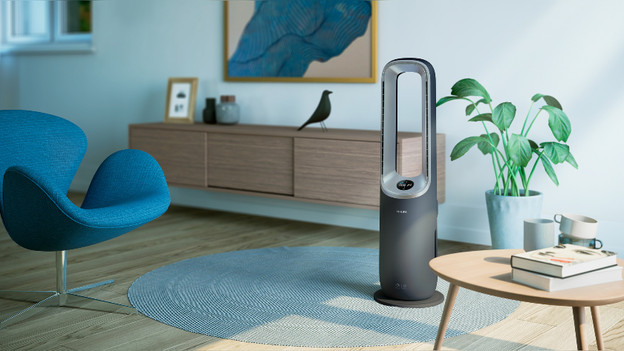
If you suffer from allergies like hay fever or dust mites, an air purifier helps to reduce these complaints. These air purifiers refresh all the air in the room at least 3.5 times per hour. To reduce asthma complaints, the air purifier has to refresh all air in the room 5 times an hour. These air purifiers use filters to do this. They have at least a HEPA filter and a carbon filter, so they can remove dust particles, pollen, bacteria, and unpleasant odors from the air.
Which air purifier do I need?
Article by Gaby
Air Purifier Expert.