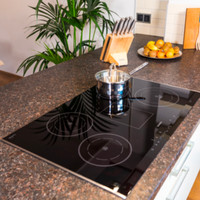
Never available again
View alternatives in the sidebar
Insure your Cooktop
Coolblue takes care of everything, from taking out an insurance to repairs
For almost all accidents
More coverage in case of damage than your standard warranty
No deductible
How do I insure my Cooktop?
First, add your Cooktop to your shopping cart. On the next page, choose the Protection Plan below. You always have a 30-day return window and pay no deductible in case of damage.
4-year Protection Plan
70,-
one-time5-year Protection Plan
95,-
one-time
ETNA: extra 3-year warranty
Receive 3 years extra warranty on your new ETNA appliance. With this extra warranty, your standard 2-year warranty is extended to 5 years. Register your ETNA appliance within 30 days after purchase on the service page of ETNA and enjoy your purchase care-free.

Specifications
Product
Product number | 859817 | |
|---|---|---|
Manufacturer code | 735812 | |
Brand | ETNA | |
Processing of your defect | At your home | |
Old product returned for free |
General features
Appliance placement | Built-in | |
|---|---|---|
Cooktop heating | Induction | |
Width | 70 cm | |
Height | 5,4 cm | |
Depth | 52 cm | |
Weight | 9,3 kg | |
Color | Black | |
Cooking surface material | Glass | |
Cooktop frame | Rounded | |
Frame material | Glass | |
Cover |
Installation dimensions
Standard cooktops cutout width | 56 cm | |
|---|---|---|
Minimum distance between the cutout and the wall (cooktops) | 4 cm | |
Built-in niche width | 56 cm |
Physical properties
Number of settings | 9 | |
|---|---|---|
Flexible cooking zone | ||
Number of flexible cooking zones | 2 | |
Boost function | ||
Keep-warm function | ||
Auto heat-up | ||
Auto shut-off in case of overflow | ||
Temperature control | ||
Pan recognition | ||
Pan size recognition | ||
Residual heat indicator | ||
Temperature setting | Settings | |
Preparation quality | High-end | |
Included by default | Installation kit, Manual | |
Oven-controlled |
User-friendliness
Control options | Touch keys | |
|---|---|---|
Memory function | ||
Safety switch-off | ||
Child safety lock | ||
Overheating protection | ||
All-off button | ||
On/off indicator |
Electrics
Suitable for plug type | Perilex (5-pin), Schuko/Gardy with grounding (2-pin) | |
|---|---|---|
Connector included | ||
Connection to number of phases in the Netherlands | 2 phases (Perilex connector) | |
Connection to number of phases in Germany | 2 phases (3680 - 7360W) | |
Minimum power supply | 7400 W | |
Location of electric connector | Right rear |
Cooking zone properties
Number of cooking zones | 4 | |
|---|---|---|
Cooking zone 1 | Large cooking zone | |
Power output cooking zone 1 | 3 kW | |
Length cooking zone 1 | 19 cm | |
Width cooking zone 1 | 21 cm | |
Cooking zone 2 | Large cooking zone | |
Power output cooking zone 2 | 3 kW | |
Length cooking zone 2 | 19 cm | |
Width cooking zone 2 | 21 cm | |
Cooking zone 3 | Large cooking zone | |
Power output cooking zone 3 | 3 kW | |
Length cooking zone 3 | 19 cm | |
Width cooking zone 3 | 21 cm | |
Cooking zone 4 | Large cooking zone | |
Power output cooking zone 4 | 3 kW | |
Length cooking zone 4 | 19 cm | |
Width cooking zone 4 | 21 cm |